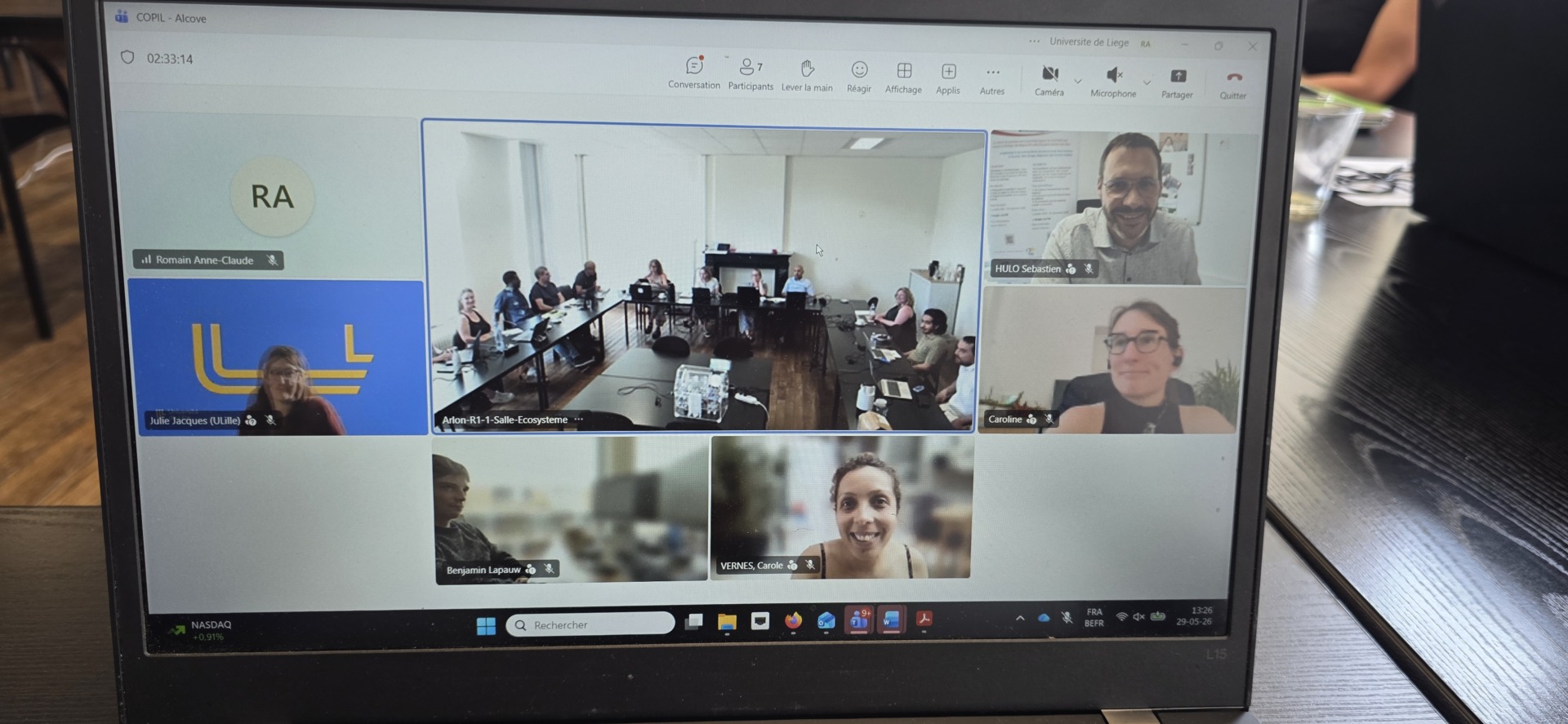


The INTERREG ALCOVE project was pleased to attend, as an observer, the seminar dedicated to the vision of healthcare institutions regarding digitalisation.
It was a rich and insightful morning, bringing together healthcare professionals, the Regional Health Agency (ARS), the Belgian National Institute for Health and Disability Insurance (INAMI), and institutional representatives. Different perspectives, yet remarkably aligned.
Here are our key takeaways:
An ambitious and valuable survey
Congratulations to the SYNDIGITALPRO teams for conducting a survey among healthcare professionals across the three regions involved in the project.
109 responses — a solid, rare, and precious dataset reflecting their practices, needs, and daily challenges.
Digitalisation must address a real need
The discussions highlighted a crucial point: a digital innovation has real impact only when it is:
- designed with healthcare professionals
- co‑constructed for them,
- and ultimately beneficial to patients.
This requires support, training, awareness-building, and, above all, early involvement of teams in the design of the solutions.
It seems obvious… yet too often overlooked.
A project’s effectiveness is measured once it becomes part of routine care
An innovation succeeds only when it naturally integrates into the daily workflow of teams.
Such integration is possible only through a participatory, collaborative, and inclusive approach, where everyone contributes to evaluating the solution.
A warm thank‑you to JP. Delmaere (Ozconsulting)
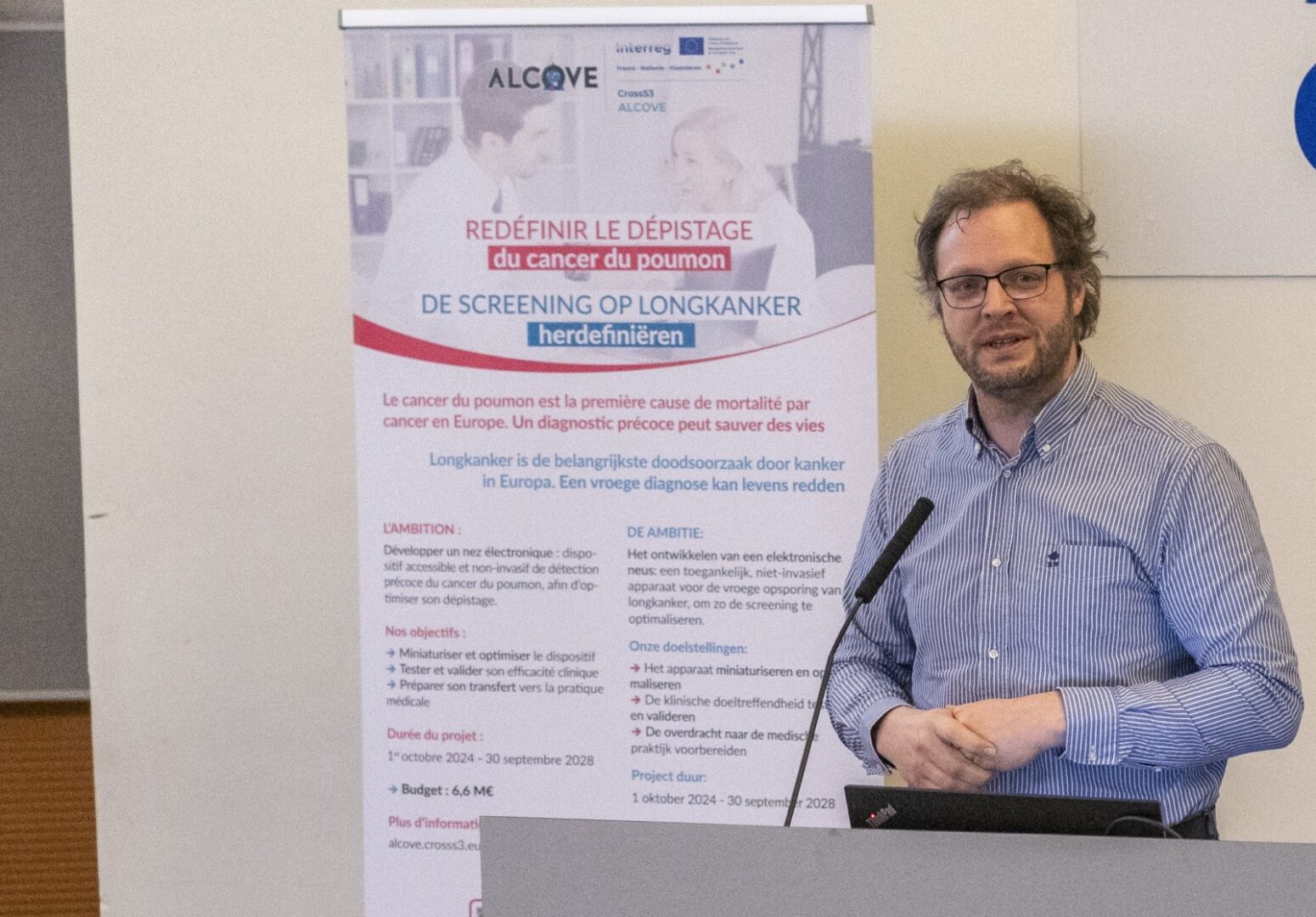
His presentation on ethics in healthcare and AI particularly resonated with the audience.
A key contribution to building responsible, meaningful, and widely accepted projects.
All these insights echo with the ALCOVE project
Within ALCOVE, we are developing a technological innovation to enable the early detection of lung cancer through the analysis of exhaled breath.
Beyond the scientific validation of the instrument, we remain focused on a crucial challenge: how the tool will be perceived, used, and adopted by the clinical teams involved in the study.
Their feedback will be invaluable and will guide the continuous improvement of the device, with the long-term goal of market deployment and integration into everyday clinical practice, for the benefit of patients.