
Dear Anne‑Claude, could you briefly introduce yourself?
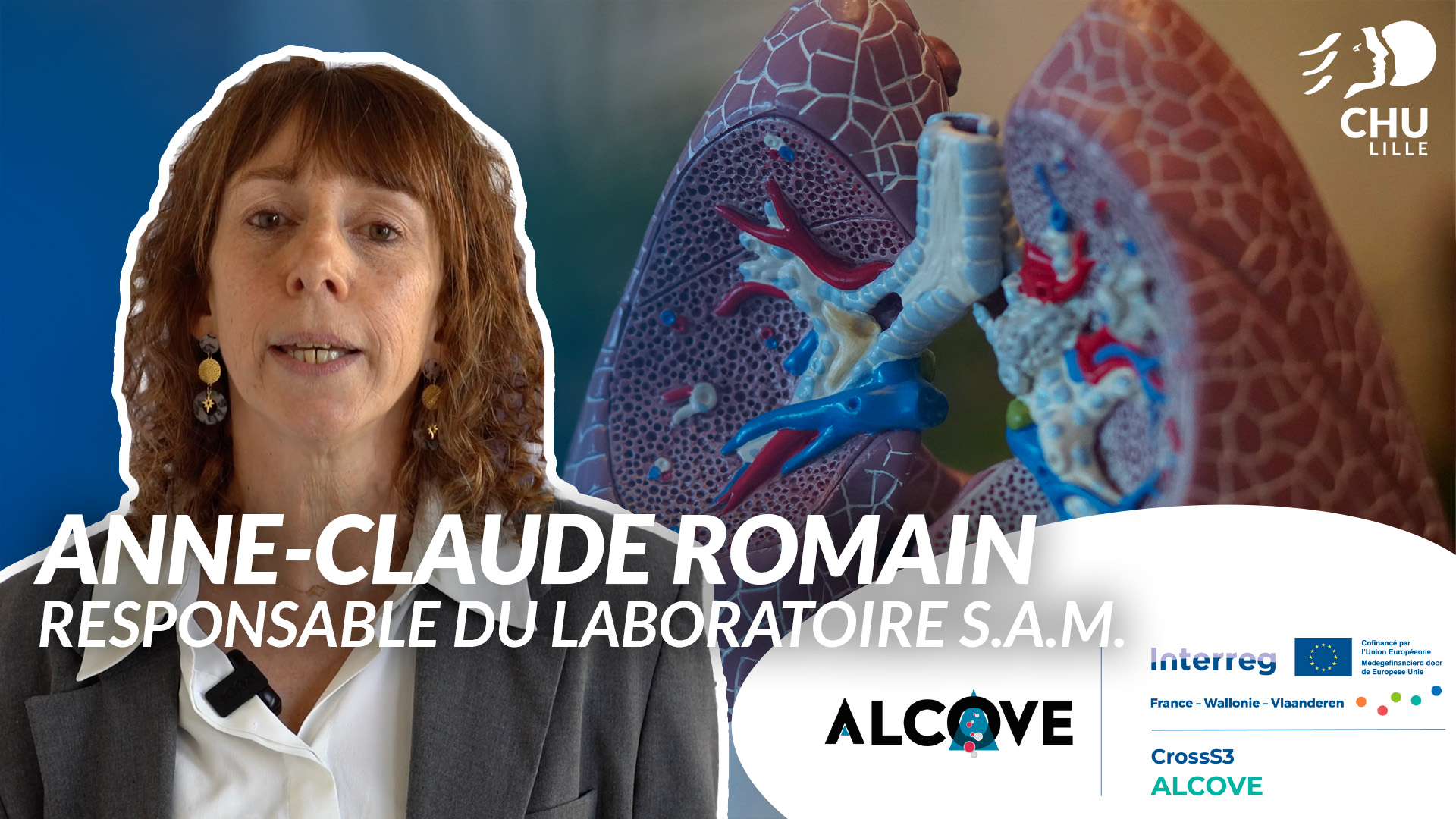
I am a professor at the University of Liège, where I lead the SAM laboratory (Sensing of Atmospheres and Monitoring) based on the Arlon campus.
What is your role in the ALCOVE project?
Our team is responsible for a major challenge: designing and building the electronic nose for the ALCOVE project, and producing eleven identical units.
It is a significant responsibility, as this instrument is at the core of the experimental system. Without it, there can be no measurements and no clinical tests.
The design, development and reproducibility of these prototypes therefore represent one of the key technical challenges of the project.
What role does collaboration play within your work package?
Collaboration is absolutely essential. The electronic nose is not a standalone instrument: it depends on the expertise of many partners.
First, it cannot function without the sensors provided by specialised teams.
Just like a human nose, if it cannot “perceive”, it cannot analyse anything.
The performance of these sensors — sensitivity, detection limits, stability — directly determines the effectiveness of the system.
Next, the clinical phase is a turning point.
Unlike the previous PATHACOV project, where we worked in the laboratory on artificial breath samples, ALCOVE involves use in a hospital environment.
This requires strict compliance with medical standards and close collaboration with clinicians, who present the device to patients and ensure that it is used in accordance with clinical requirements.
The contribution of the teams working on signal processing and artificial intelligence is equally crucial.
The sensors produce large volumes of data that must be analysed, transformed into useful information, and presented to clinicians through a clear and intuitive interface.
Finally, data security and data management are indispensable components.
The information collected consists of sensitive medical data: it must be protected, stored securely, and used solely for research purposes.
This requires rigorous collaboration with the partners responsible for regulatory compliance and data protection.
In summary, the electronic nose exists thanks to the complementary expertise within the consortium.
It is, truly, a collective effort.