
WP1 – Coordination and Governance: a well‑structured dynamic
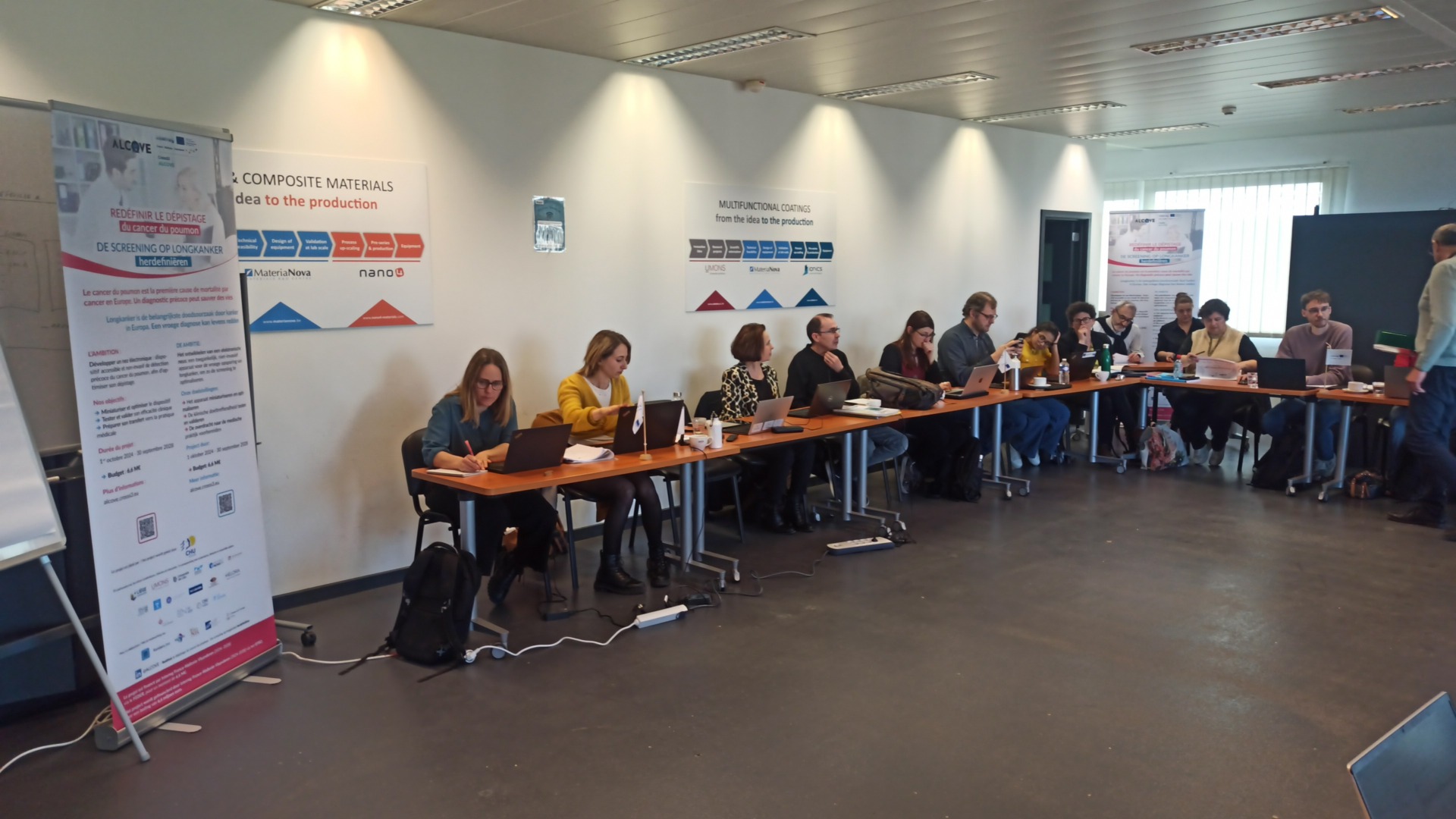
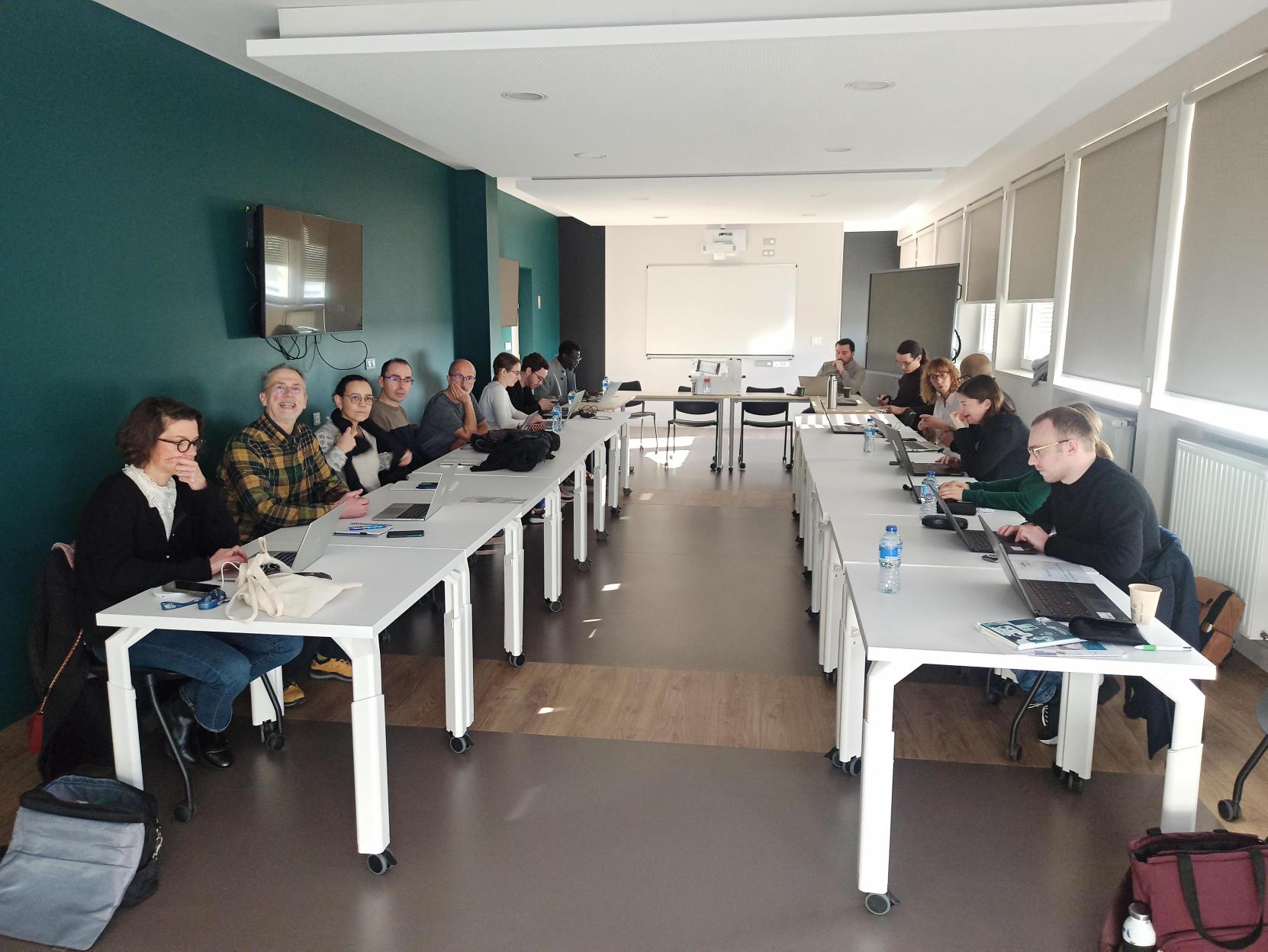
As project leader, CHU de Lille coordinated two major milestones in September:
the Steering Committee and the first Advisory Committee, both held at Eurasanté.
Throughout the semester, monitoring tools were updated, and both the operator report and activity report were finalised.
The teams also prepared the implementation of a shared collaborative space — with NextCloud selected at the end of the period — and began drafting a collective confidentiality agreement, a prerequisite for the upcoming Intellectual Property Committee.
Effective coordination remains essential to keeping the project on track.
WP2 – Communication: visibility and engagement
The teams have strengthened ALCOVE’s visibility on all fronts.
Updated graphic tools (poster, roll‑up banner, templates) are now available on NextCloud to harmonise communication materials.
The project also benefited from strong media exposure:
after the Fête de la Science events in Lille and Reims, and an international ISOCS webinar, a television report aired on M6 provided unprecedented visibility to the general public.
The LinkedIn community is already approaching 270 followers.
Objective: reach 300.
WP3 – Clinical Study: a protocol awaiting validation
Clinical teams continue preparing the ALCOVE study in collaboration with the research and innovation sponsorship office of CHU de Lille.
The recent restructuring of internal procedures, combined with the complexity of the dossier (medical device), has slightly extended regulatory timelines. Meanwhile, finalisation of the prototypes remains essential before official submission.
These constraints do not diminish partner engagement:
the protocol is being refined, inclusion criteria are consolidated, and data‑collection methods strengthened to ensure a robust study.
Objective: be ready to launch the clinical phase as soon as the devices comply with requirements and regulatory approvals are obtained.
WP4 – The electronic nose ready for its first tests
In Arlon, the teams at the University of Liège have reached a major milestone:
the BRIDGE device, the technological core of ALCOVE, is now operational.
After several weeks spent addressing technical challenges, the sampling system and selected sensors are fully functional.
The certificate of conformity, essential for clinical use, is being drafted in collaboration with CIC‑IT Lille.
The next step will be decisive:
conduct discriminative tests using artificial mixtures and samples simulating human breath. These tests will evaluate:
sensor sensitivity (including sensors developed by UMONS/Materia Nova under WP5),
measurement stability,
and the device’s ability to generate reliable signatures.
In parallel, ergonomics and acceptability tests with volunteers will guide adjustments to ensure the instrument is intuitive and compliant with hospital requirements.
WP5 – Progress on sensors and sensitive materials
As part of WP5 — dedicated to evaluating and improving sensors to detect extremely low concentrations and prepare for industrial transfer — a series of miniaturised resistive sensors based on metal oxides were produced by Materia Nova and UMONS, and delivered to the ULiège–Arlon team for testing and integration into the electronic nose prototype.
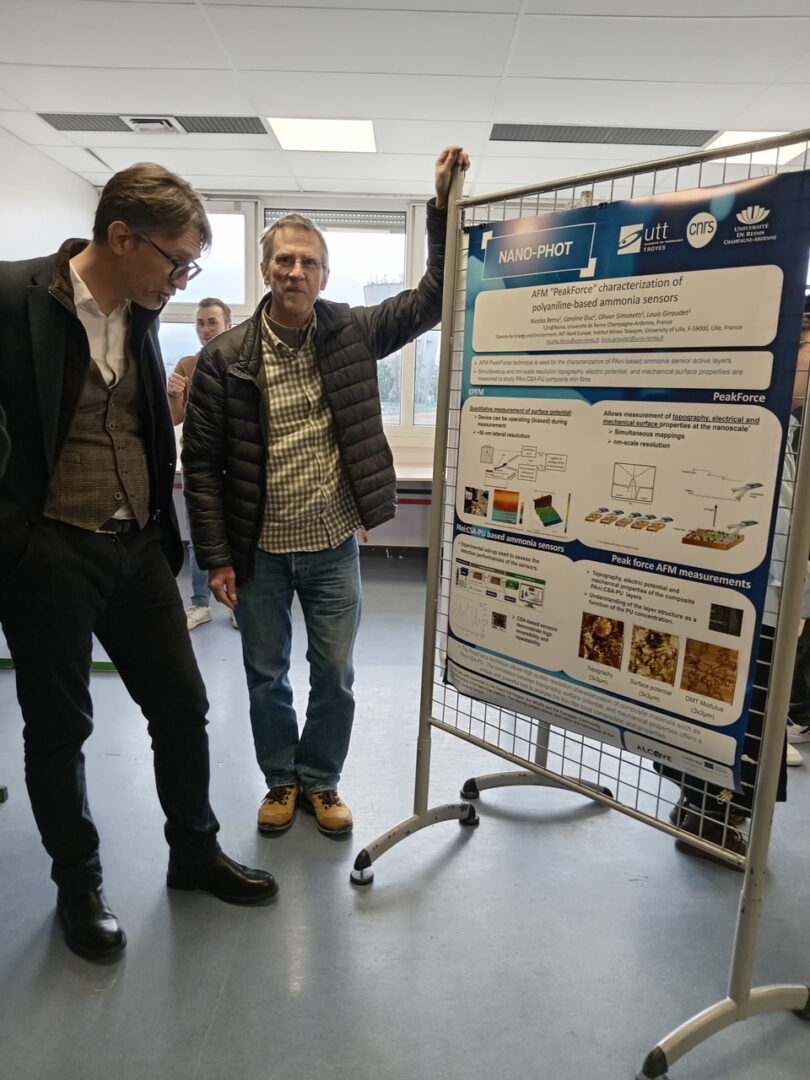
Meanwhile, the L2n Laboratory (URCA) continued its work:
alignment of masks for conductivity measurements,
transistor testing under humidity conditions, confirming stability.
Tests exposing organic sensitive layers deposited by IMT Nord Europe on Reims transistor substrates to VOCs were conducted in early December.
In the coming weeks, Materia Nova will deposit thin zinc oxide (ZnO) films by PVD onto transistor substrates provided by Reims.
The gases tested in this configuration will mainly be alcohol vapours.
WP6 – Sensor readout and interface development
Within this work package — responsible for implementing signal‑processing and decision algorithms within the electronic nose prototypes — the teams at the University of Liège have completed real‑time readout of the 12 MOx sensors and the auxiliary sensors (temperature, humidity, CO₂).
Respiratory profiles are now recorded, and raw data can be saved onto an SD card.
This progress prepares the next phase: feature extraction to feed the discrimination algorithm.
Meanwhile, software partners at KU Leuven are developing the user interface prototype:
an offline Android application connected to the device,
differentiated access for clinicians and technicians,
clear instructions,
maintenance alerts,
and export functionality for scientific analysis.
They are also designing advanced software components to enhance overall system reliability, integrating error‑detection and fault‑tolerance mechanisms to ensure safe and robust operation in real‑world conditions.